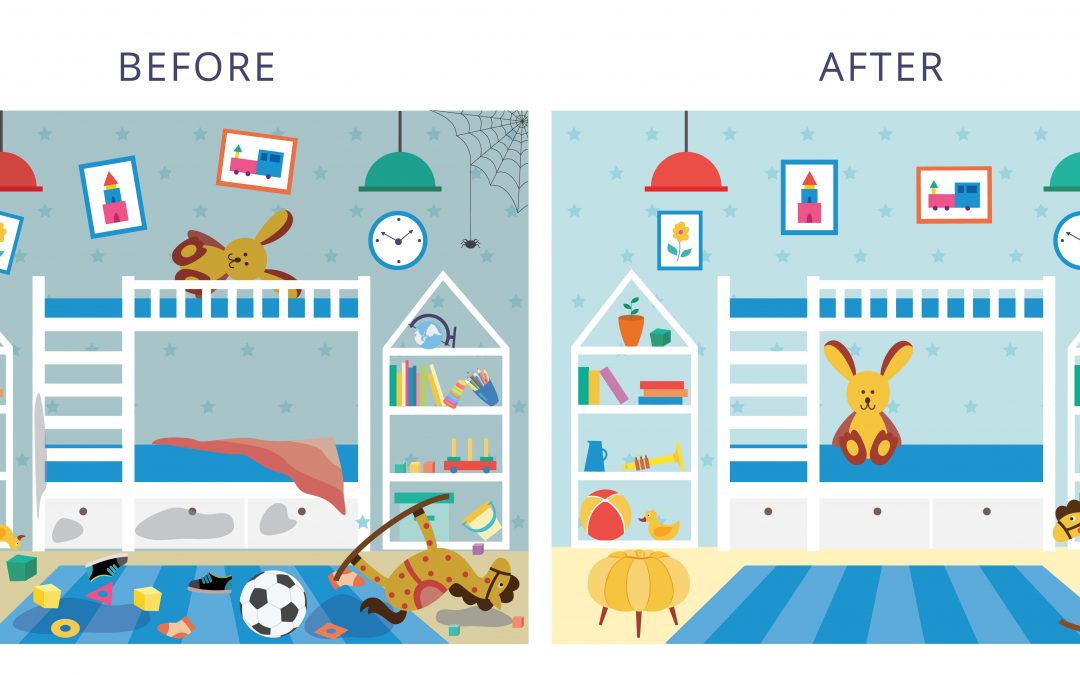
Welcome to our Sunday Snacks with Sam and Ellie!Today, Sam is wondering if sustainability, which includes her efforts to store a minimum of 30-day supply of food for her family of 4, works with Minimalism. If you follow our conversation, you’ll realize that these two concepts are NOT mutually exclusive. Sam in her 3 bedroom house and Ellie in her 400 sq ft apartment share their ideas. Sam’s ‘hot disaster’ description of her trying to minimalize is given some ‘breathing space.’
At the same time, we also share that maybe the ‘beautiful photos’ of minimalist rooms and as Sam says, “Marie Kondo’s vision of organize and keep only what ‘brings you joy’!” are just that – images. Join us as we tackle these concepts and help Sam see her ‘hot disaster’ as a lot ‘cooler’ than she realizes!
Enjoy this video and let us know if, and how, you make it work. CLICK HEREto read the transcript while you listen.
Sam mentions our friend, Mary Ratzesberger, and her business – organization! Do visit your website and FB page.
Mary’s “WHY”
The practice of helping others eliminate clutter and create streamlined and calm physical surroundings brings me joy! I am committed to reaching my client’s organizing and simplifying goals.
If she’s not close enough to work with, her website gives some great steps to working on it yourself.
NOTE: If you enjoy our life hacks and simple common-sense approaches to sustainability and everyday life, please spread the word. Visit and like our youtube channel and our Facebook page. Sign up for our newsletter – the form’s on the HOME page. Share your thoughts with us on youtube or FB. And share us with your friends. Here’s to your peace of mind because you’re prepared!
Between us, we have over 100-years of experience, and Sam’s only 40!
If you enjoy our life hacks and simple common-sense approaches to
sustainability and everyday life, please spread the word.
Sustainability is the ‘in’ word today. But as we share our Sunday Snacks with Sam and Ellie, you’ll realize that sustainability has been with us for a very long time. From cleaning and flattening tin cans during WWII to grandma taking the vegetable peelings out and throwing them in the garden.
Sam shares how she learned to sew and now patches jeans and fixes buttons on their clothes. While Ellie shares stories from the ’70s when homesteading was a trend.
Although each generation likes to think what they’re doing is new, it quite often is not new! But our consumerism economy makes sustainability an ever more important concept today. What were common sense and practical decades ago is now a priority to save the planet. Even more importantly, many of these ways to recycle, reuse, and reduce are helping families and seniors to balance their budgets. Here’s a sample of how important small efforts can be.
Tin Cans Go to War
CLICK HERE for a great article from the Orlando Sentinel about salvaging tin cans to help win the war (WWII):
A 1945 magazine article said it all in two sentences: “Nothing is more American than the tin can; and Yankee ingenuity never stops. GIs use empty tin cans for literally everything….”
Ellie and Sam share some thoughts on their personal memories. Sam learned many tips from her grandmother that are very helpful and practical today. While Ellie shares favorites books from the 70s including the Whole Earth Catalogand Living the Good Life.The following quote from Wikipedia in reference to the Whole Earth Catalog gives us a taste of ’70s attitudes for many Americans. The resources in these old catalogs are still valuable although I imagine many of the resources are no longer available. But like perusing seed catalogs in the middle of a snowstorm gives one hope, browsing the pages of these catalogs can be just as hopeful to those interested in sustainability today.
The Whole Earth Catalog (WEC) was an American counterculture magazine and product catalog published by Stewart Brand several times a year between 1968 and 1972, and occasionally thereafter, until 1998. The magazine featured essays and articles, but was primarily focused on product reviews. The editorial focus was on self-sufficiency, ecology, alternative education, “do it yourself” (DIY), and holism, and featured the slogan “access to tools”. While WEC listed and reviewed a wide range of products (clothing, books, tools, machines, seeds, etc.), it did not sell any of the products directly. Instead, the vendor’s contact information was listed alongside the item and its review. This is why, while not a regularly published periodical, numerous editions and updates were required to keep price and availability information up to date.
Steve Jobs compared The Whole Earth Catalog to Internet search engine Google in his June 2005 Stanford University commencement speech.
When I was young, there was an amazing publication called The Whole Earth Catalog, which was one of the bibles of my generation … It was sort of like Google in paperback form, 35 years before Google came along. It was idealistic and overflowing with neat tools and great notions.
Then at the very end of this commencement speech Jobs quotes explicitly the farewell message placed on the back cover of the last 1974 edition of the Catalog (#1180 October 1974 titled Whole Earth Epilog) and makes it his own final recommendation : “Stay hungry. Stay foolish.”
Sustainability today involves best uses for many products we use regularly and consideration of ‘just how many do I need.’ In the video, Ellie mentions a full-circle recycling company. Here’s the link:
Fashion is one of the most pollutive industries. We’re producing more clothing than ever before and wearing it much less. Over 85% of all textiles end up in landfills, including clothing from resale and donation centers. What they can’t sell gets trashed or burned, causing major social and environmental problems. Most of it can be kept out of landfills if we’re thoughtful and proactive.
Luckily, we have a solution…
For Days is the first circular fashion brand. We’ve spent the last 4+ years building a network of expert recycling partners to keep clothing out of landfills. We design products for circularity. Everything is organic, non-toxic, and can be recycled into new fabric.
We collect, sort, and recycle used garments, linens, and more, from any brand through our best-selling Take Back Bag.
Ellie will share her experience using this site in a future post.
In the meantime, we’d love to hear from you. What sustainable practice did you learn from another generation? Please share it with us!
If you enjoy our life hacks and simple common sense approaches to sustainability and everyday life, please spread the word. Visit and like our youtube channel and our Facebook page. And sign up for our newsletter – the form’s on the HOME page. Share your thoughts with us on youtube or FB. Here’s to your peace of mind because you’re prepared!
Between us, we have over 100-years of experience, and Sam’s only 40! If you enjoy our life hacks and simple common sense approaches to sustainability and everyday life, please spread the word.
Today we’re taking the discussion about bug-out bags to the average family. While bug-out bags (or GO-bags) are always mentioned when talking with those who are preparing for the ‘end of the world’ scenario, we’d like to talk about a common sense approach to preparedness.
CLICK HERE to read the transcript while you listen to the video.
Remember, we started this blog shortly after the covid pandemic sent us all into a weird world of masks, shots, social distancing, many losing friends and relatives, and our daily lives interrupted! As is usual, especially in America, folks rushed to the grocery store where you found empty shelves for toilet paper, hand wipes, sanitizer, etc. We were really confused that this rush for toilet paper (and more) occurred all over the country. This led us to consider how we might be better prepared and that, just maybe, average families needed a little help.
Now going on three years of major changes and upheaval in our lifestyles due to the pandemic, we’ve also seen entire communities uprooted by weather disasters and fires. That started us thinking, “What if someone knocked on my door and told me I had 5 minutes – or less – to leave my house. Would I have what I needed to grab available in a matter of minutes?”
Just One Thing!
This video discusses that idea and encourages you to start today. Do one thing – ONE – to begin your bug-out bag escape. Then just keep adding another item. Consider some of the following to get started:
Initial Considerations for your bug-out bag:
Copies of important papers in a waterproof container for all family members (Soc. Sec. card, driver’s license or ID, Passport if you have one, medical information, insurance info, bank info, possibly passwords to accounts, contacts)
Medicines for at least a week, ideally 30 days.
Cash – you’ll need this to buy things when you get to safety.
Personal needs: toothpaste, toothbrush, sanitary items, etc. Travel sizes would work in this scenario.
Phone and Charger
If you have children, you might consider a small item for comfort and maybe a game that can easily be put in a backpack and played quietly. A kindle filled with stories for kids and adults may also help. Of course, you’ll want to be sure to take the charger.
Water – in a moment’s notice you can’t carry a lot, but add a few bottles
Munchies – granola bars, etc that will keep everyone going until you find help
Flashlight and batteries
Let’s not forget our furry friends. Dog/Cat dish, food, water, leash or carrier, etc.
And we added DUCT TAPE and TRASH BAGS! Why? Well, Sam will remind you that “McGyver” could fix anything with duct tape. But seriously, you can wrap a broken arm or leg with a trash bag and duct tape to keep it in place till you can get help. You can create a temporary toilet using a trash bag and a bucket or a hole in the ground. Duct tape can repair a broken handle, a hole in a sleeping bag or backpack, etc.
As we share in the video, preparedness is just thinking ahead. We’ve seen enough to know that, “Yes, it CAN happen to us!” Whether a hurricane or tornado, floods or fires, or even a tree bringing down power lines. You may only be in an emergency situation for a day or two, but it could also be a week or more. Start today to plan ahead. What would you need minimally? What would your children need? What does someone who might be trying to help you need? Then start your bug-out bags, one for each family member.
You can make it a game for the kids. And now and then practice by grabbing the bags and heading to a park. This isn’t about being scared – but being prepared. Then … B. R. E. A. T. H. E. You may not have all the answers, but you’re thinking ahead and making plans. We’ll share more tips as we go along. But for now – let us know what your first item will be in your family’s go-bags.
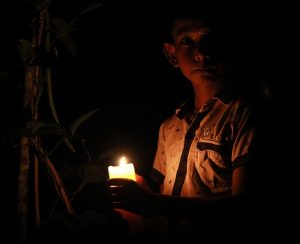
Remember, a candle in the dark eases our fear. Knowing we’re prepared gives us a bit of that same security.
If you enjoy our life hacks and simple common sense approaches to sustainability and everyday life, please spread the word. Visit and like our youtube channel and our Facebook page. And sign up for our newsletter – the form’s on the HOME page. Share your thoughts with us on youtube or FB. Here’s to your peace of mind because you’re prepared!
In a chaotic world, it’s easy to lose our sense of self. We can often feel drained and wonder what, if anything, we’ve accomplished. We might find it hard to see the value of a day that seems filled up with … well, stuff! Join us on Sunday Snacks with Sam and Ellie as we discuss a way to appreciate the small things of the day and realize that it isn’t all just busyness.
If you like to read along, you can CLICK HERE for the transcript.
Sam shares the sense of overwhelm and feeling unaccomplished when she’s had a busy day or week. Yet, in reality, she lives fully and in alignment with her core values. Why this conflict? It was recently made more painful when someone mentioned that “Oh, you’re just a stay-at-home mom!”
Ellie shares a bit of history that women have experienced with both the ‘Oh, you’re just a stay-at-home mom” vs “I can have a career, husband, children, and do it all!” (Some things never change…) She also gives us a few words of encouragement with a simple moment of reflection.
Your efforts do matter.
Stopping at the end of the day to consider that busyness, asking if it aligned with our core values, and taking a moment to be grateful that we could do those things, may just be enough to switch off the “I’m not enough” self-doubt that we sometimes feel.
We didn’t mention it in the video, but we would also add: SMILE! Look around your home and at your family, consider your job or business if you have one, and SMILE! After all, isn’t that the purpose!
If you enjoy our life hacks and simple common sense approaches to sustainability and everyday life, please spread the word. Visit and like our youtube channel and our Facebook page. And sign up for our newsletter – the form’s on the HOME page.
We’ve spent over two years dealing with the Covid Virus. Today we struggle with the Ukraine-Russia conflict. Over the last decade, we’ve seen ever-rising numbers of natural disasters! It’s all frightening. Add the continuous updates from the media and social media, and we’re feeling overwhelmed. Gas prices are rising. Inflation is affecting everything from our budgets to our shopping, which in turn affects businesses and the economy. Too many are feeling helpless.
What can we do? Is there an action we can take? Most certainly we can pray, donate, and maybe even be better neighbors. But are we learning anything? No, I’m not talking about running out to buy toilet paper and milk before the storm, or even worse, just after the storm! That’s been the point for Sam and me to work on this blog. It’s about thinking ahead a wee bit. And no, I’m not talking about doomsday preppers though I appreciate their efforts and philosophy as well.
With the virus, we watched in tears as families were unable to communicate with one another. We saw fear in the eyes of the sick and worry in those who love them. With the war in Ukraine, we’re watching millions of families running to safer locations while bombing and shooting occur around them.
What would you do if you had to run on a moment’s notice? Are you ready?
Why do we watch these scenarios play out in real life and do nothing? Do we really believe “it can’t happen here?” If we do, then our worry is for naught. Even when we know that natural disasters such as fires and hurricanes are headed our way, we somehow believe the worst can’t happen to us. Oh, yes, we worry ourselves sick. But then, we wait.
Seriously, if someone knocked on your door and said, “You have 60 seconds to leave,” would you be ready? The majority of us would not be ready and would immediately be panicked and helpless. Why is that? We’ve been forewarned just by seeing what’s happening in our country and around the world. What do we need to think beyond the rush to buy toilet paper and milk? Seriously?
Is there an action we can take? Is there any way to be prepared?
Consider a day of prepping for your own welfare and security. As an older woman, I’ve pondered this a number of times. I don’t have a car so I would either need to head out on foot or hitch a ride. Of course, I have family and friends nearby so I’m sure I’d get a ride. But what’s my responsibility? What can I do to be prepared? What do I have prepared that I can grab in 60 seconds?
Bugout or Go-Bag Suggestions
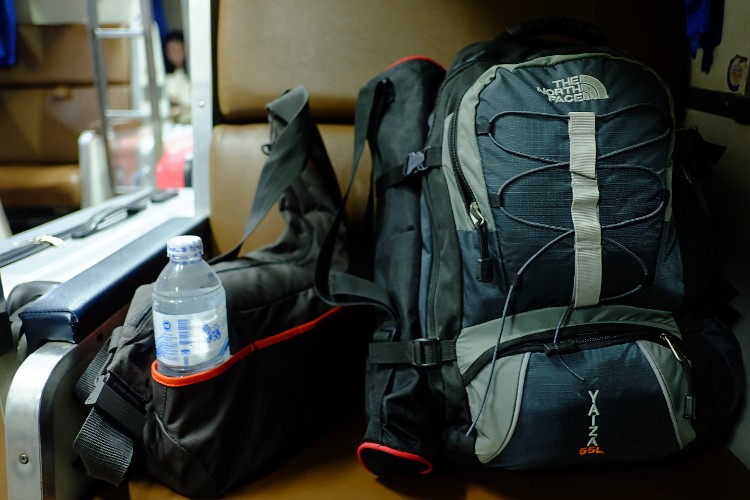
Everyone – from infants to seniors – should have a bugout bag. Simply put, it’s a backpack or duffle bag that you grab that has the very basic items you’ll need if you have to leave your home and don’t know how soon you’ll be back. And you can prepare it over a weekend. It may just save your life. At the very least, it will make the threat of an emergency that might require a bugout bag less stressful.
Copies of important papers in a waterproof container for all family members (Soc. Sec. card, driver’s license or ID, Passport if you have one, medical information, insurance info, bank info, possibly passwords to accounts, contacts)
Medicines for at least a week, ideally 30 days.
Body wipes to keep clean until you can have a bath/shower.
Cash – you’ll need this to buy things when you get to safety.
Change of clothes or two
Personal needs: toothpaste, toothbrush, sanitary items, etc. Travel sizes would work in this scenario.
Phone and Charger
Possibly a few family photos in a waterproof container
If you have children, you might consider a small item for comfort and maybe a game that can easily be put in a backpack and played quietly. A kindle filled with stories for kids and adults may also help. Of course, you’ll want to be sure to take the charger.
Water – in a moment’s notice you can’t carry a lot, but add a few bottles
Munchies – granola bars, etc that will keep everyone going until you find help
Flashlight and batteries
An emergency radio is something we don’t often think about. But if you’re in a situation where you can’t get information, a radio that has the NOAA channel for weather will help keep you aware of what’s happening. Ideally, along with battery backup, it can also be hand-cranked or solar-powered. Quite often the radio has the ability to charge a phone, etc.
Any items specific to a family member’s needs.
Let’s not forget our furry friends. Dog/Cat dish, food, water, leash or carrier, etc.
Most certainly there are many more items that come to mind. But we’re talking survival when you must run! NOW!
You’ll need to look at your own lifestyle and special needs and determine what absolutely MUST be in that backpack or bug-out bag. But do it now. Don’t wait until you have to run! There’s a wonderful post for those with elderly or disabled members of the family. READ IT HERE
We’ve seen enough in the last decade to know that yes, it can happen to us. Stop watching the screen as if you are removed from such tragedy. Stop worrying about “what if?”
Start preparing. You can even have a bag ready in your car or where you work. Silly? Possibly. But will it be silly the moment you need it? Absolutely not!
Stop passively watching and worrying. Take action today. Make those copies of important papers should you have to leave your home at a moment’s notice. Know where you can immediately grab those medicines to toss in the bag on your way out the door. Have a list on your refrigerator or cupboard to remind you of the last-minute items to throw in each Bugout Bag.
There’s a ton of solid information, just do your research. You’ll find sites that will review items to give you best choices and why. There are sites that will highlight specific needs. There’s no need to be crazy about it. Just go through a day and see what you use. EX: I brush my teeth – need toothpaste and a toothbrush. I take my meds. Pack some or put it on your list to grab when you run. I use a specific cream for my baby. PUt one in his/her go-bag. An afternoon of preparation may be the difference between being totally lost and having enough to get to a safe location with the information and needs that will help you survive.
Preparedness = Less Stress
One last thought. When you leave, think ahead. Don’t drink up all the water and eat on the munchies as if you’ll find the nearest convenience store in the next hour or two! Be smart. Stay alert and realize that the safe zone may take a while to get there. What’s in your Bugout Bag may need to last a bit longer than you planned. Be smart! Be prepared! Be calm.
And go “Beyond TP and Milk” – you’ll feel much calmer in the midst of the chaos! Here’s to your safety!
Good morning and welcome to Sunday Snacks with Ellie and Sam, where we’re definitely awake this morning. We had a good brunch.
Today we’re going to be talking to you about changes in 2022, because we’re ready. Oh, my word. It’s been a mess for two years of crazy!
SAM: I’m Going to go cuckoo.-kachoo like, it’s not going to be okay. I’m already going to a therapist to deal with some of the stuff, you know?
ELLIE: Yup. Yeah. Well, you know, we’re supposed to be getting like what four hugs a day or something to be healthy. Think of all the people who haven’t had hugs in years, I’m going to give you a hug. (Sam gives Ellie a hug). I’m trying to get a little more energy back by taking a little part-time job I have in an antique store. And just, you know, hopefully with spring getting outdoors a little bit more.
But we’ve developed habits over time. I mean, if we can change a habit in 30 days, what have we changed in two years?
SAM: You know, I’m currently moving three cubic – no four cubic yards of mushroom soil around my yard. That’s a lot of work and so I’m physically active. I’m doing all those things now. For me for 2022, it’s all about that mental cut the fat, because that’s just how it has to be because it’s not sustainable for me to just keep living in this heightened state of panic and fear and just God-awful pandemonium.
Ellie: In that grip of, of being hypervigilant about everything, we also, I think, discovered parts of ourselves and they don’t have to be positive parts, but if we can acknowledge those parts, then we know we, we now have clues as to what to use to improve in 2022. The things we learned about ourselves, and even though they may be negative, are still things to bring into a positive 2022, because we can look at those and say, okay, that didn’t work well. I don’t need to keep doing that.
What lessons are you carrying into a more positive 2022? Share with us on our FB page.
Between us, we have over 100-years of experience and Sam’s only 39! If you enjoy our life hacks and simple common sense approaches to sustainability and everyday life, please spread the word.



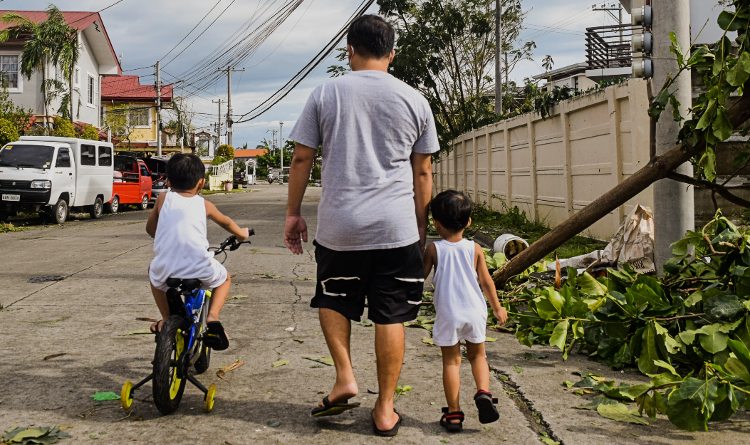


 Why do we watch these scenarios play out in real life and do nothing? Do we really believe “it can’t happen here?” If we do, then our worry is for naught. Even when we know that natural disasters such as fires and hurricanes are headed our way, we somehow believe the worst can’t happen to us. Oh, yes, we worry ourselves sick. But then, we wait.